
Human Right to Food

Confronting the Global Food Challenge

A group of civil society organizations, including Grassroots International, will participate in a conference in Geneva, Switzerland, entitled "Confronting the Global Food Challenge: Finding New Approaches to Trade and Investment that Support the Right to Food" The conference-convened by IATP, the Ecumenical Advocacy Alliance and FIAN-will meet November 24-26 to explore the impact of trade and investment on the right to food and to develop new approaches that put human rights at the core. Grassroots International Executive Director Nikhil Aziz will facilitate a working group with participation by Achmad Yakub of the Serikat Petani Indonesia (a member of the Via Campesina) on Agriculture & Climate Change.

New Report on Agro-fuels from Grassroots’ Brazilian Partners

Rede Social, a Grassroots International partner, and longtime ally the Pastoral Land Commission (CPT) released an 80-page report on the expansion of sugar cane plantations for agro-fuels in the Amazon and Central Plateau region of Brazil.

Update on Gaza's Blockade

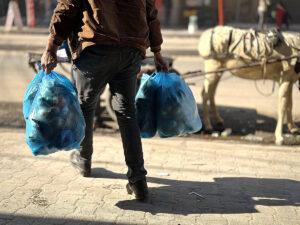
Gaza is once again in a heightened state of emergency and panic as UN food aid has been unilaterally blocked by the Israeli authorities.  According to UN and other sources, more than 80% of Gaza's 1.5 million residents are dependent on food aid.  The Gaza Strip is completely sealed off from the outside world by the strictly manned borders with Israel and Egypt, and the Mediterranean waters patrolled by Israeli gun boats.  Palestinian civilians are once again facing the threat of military incursions.  On the other side of the border, some Palestinian rockets are reaching as far as the city of Ashkelon, terrifying the Israeli population as the cycle of violence intensifies.

Grassroots International Joins with U.S. Allies to Tell the Candidates: "Reform food policy and end the food crisis"

Sign the Call to Action now!

Global food prices have almost doubled in recent years, in large part due to U.S. policies, and now nearly 1 billion people worldwide - including 50 million here in the U.S. - are facing hunger. Keep reading to find out how you can take action for change.

The food crisis is not a crisis in the availability of food.  In fact, there is more than enough food to feed everyone in the world.  Over the last 20 years, world food production has risen steadily at over 2% a year, while the rate of global population growth has dropped to 1.14% a year.  

Announcing: A New Popular Education Tool!

Food for Thought and Action: A Food Sovereignty Curriculum now available for free download

Grassroots International and the National Family Farm Coalition announce the release of a new popular education tool that can help you understand and fix the world food crisis: Food for Thought and Action: A Food Sovereignty Curriculum.

It's been said that "you are what you eat." In the face of a global food crisis, it's clear that we've been forced to swallow far more than what's on our plates. Our global food system is broken, with nearly a billion hungry people around the world and millions more forced from their failed farms as industrial agriculture privatizes and despoils our water, soil and biodiversity.

Haiti is going from Catastrophe to Catastrophe

As Haitian waters recede - at least for now - aid and relief efforts are also diminishing for the nearly one million people who are in desperate need of emergency food.  The wounds of this reality are particularly raw in the countryside where the majority is struggling to survive. 

Ecuadorians’ New Constitution Guarantees Resource Rights & Makes Food Sovereignty a Right

On September 28, 2009, Ecuadorians approved a  new constitution that includes an article granting nature the right to "exist, persist, maintain and regenerate its vital cycles, structure, functions and its processes in evolution." The new constitution recognizes the right of all Ecuadorians to have access to sufficient resources to feed themselves in a sustainable manner with respect to cultural differences between people and communities. A priority is local food production, recognizing implicitly that the right to adequate food represents, among many things, the right of the small food producers, harvesters and fisherpeople to acquire appropriate resources and the right to rely on the laws, measures and programs that assist them in providing food.

The Via Campesina to Hold 5th International Conference

Gathering Scheduled for Maputo, Mozambique 16-23 October

Partner press release from Via Campesina

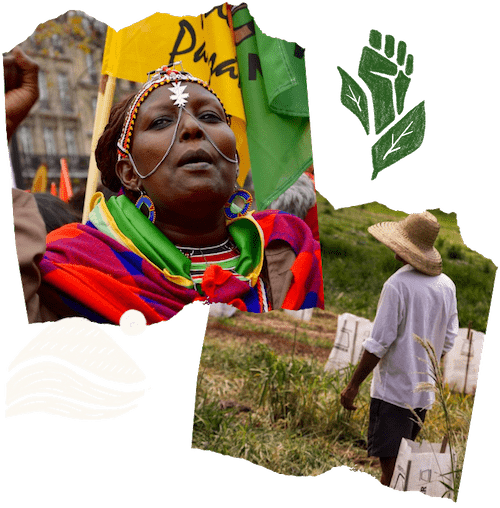
More than 500 men and women farmers and leaders from 70 countries will gather in Mozambique from October 16 to 23, 2008 to attend the 5th International Conference of the Via Campesina. Grassroots International is providing support for its partners, including members from Brazil, Haiti, Central America and Mexico, as well as a delegation from Indonesia, to participate in the international event. Two staff members from Grassroots International will also attend part of the conference, which will focus on Food Sovereignty and the current agricultural crisis. The Via Campesina's press release outlines more details of the conference.

Read the original press release at: Via Campesina holds its Vth International Conference

Manufacturing Hunger: Indonesia’s Food Crisis

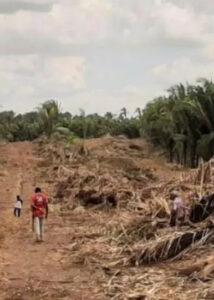
The principle of food sovereignty places local control of food production and distribution at its core. Unfortunately, throughout the world industrial farms, corporations and the policies that benefit them take that control away from local farmers and communities. In a recent report , Grassroots International's colleagues at the Oakland Institute describe this situation and its dire consequences in Indonesia where "excessive dependence on global markets, followed by the collapse of traditional agricultural structures, as well as almost non-existent social policies, have manufactured widespread hunger in Indonesia today."

Playing the Blame Game: Who is Behind the Food Crisis?

Research presented in the Oakland Institute's recent publication "The Blame Game: Who is behind the World Food Crisis?" pokes holes through the myth that the "economic prosperity" experienced by an emerging minority in India has been a major contributor to the dramatic increase in global food prices.

Syndicate content